If you are getting ready to sell a luxury home in Lehigh County, one decision can shape everything that follows: how well you prep it and how accurately you price it. Even in a seller’s market, high-end buyers notice condition, compare details closely, and expect a home to feel market-ready from day one. The good news is that with the right plan, you can protect value, attract stronger interest, and reduce surprises during negotiation. Let’s dive in.
Why pricing matters in Lehigh County
Lehigh County was still a seller’s market in March 2026, with a median listing price of $379,900, about 1,100 homes for sale, a median 26 days on market, and a 100% sale-to-list ratio. That tells you buyers are active, but it also shows that homes are generally selling at asking, not far above it. In other words, the market is rewarding homes that are priced well and presented cleanly.
For luxury sellers, county averages are only a starting point. Local pricing can vary sharply by area, and that matters when your home sits in a smaller, more specialized buyer pool. A broad county number will not tell you what a refined property in a specific neighborhood or township should command.
The difference between nearby submarkets makes that clear. In March 2026, Allentown’s median listing price was $264,250, Bethlehem’s was $350,000, and Upper Saucon Township’s was $825,000. That spread is exactly why luxury pricing in Lehigh County has to be built from neighborhood-level evidence, not countywide averages.
Start with the right comparable homes
A luxury home should be priced from the most relevant sold, pending, and active comparable properties. That means looking at homes with similar size, location, condition, lot size, amenities, and overall presentation. The higher the price point, the narrower the comp set should be.
This is especially important if your property has features that are not easy to match. A renovated kitchen, outdoor living space, premium finishes, or a larger lot may add value, but only if the local market shows buyers are paying for those differences. Pricing based on what you spent, what you hope to net, or what another area is doing can put you out of sync with actual buyer behavior.
A smart pricing strategy also reflects your timeline. If your goal is a quicker sale, a more competitive ask may help generate stronger early traffic. If you have more flexibility, you may be able to test the upper end of the supported range, but it should still be grounded in recent comparable sales.
Why overpricing can backfire
Overpricing does more than slow down showings. It can create stale-listing stigma, make buyers wonder what is wrong, and raise appraisal concerns once you accept an offer. That is especially risky in the luxury segment, where buyers tend to be selective and often have multiple options.
Interest rates also matter. Freddie Mac reported the average 30-year fixed mortgage rate at 6.48% on June 4, 2026, and higher rates can put pressure on affordability. In that kind of environment, realistic pricing helps preserve buyer interest and supports the value your home needs to show during appraisal.
Prep your home like a finished product
Luxury buyers are not just buying square footage. They are reacting to the full experience of the home, including condition, flow, cleanliness, and visual impact. If a property feels unfinished, dated, or high-maintenance, buyers may discount it quickly.
That is why presentation should be treated as part of your pricing strategy, not as a separate step. A polished home supports the number you bring to market. A home that needs too much imagination often struggles to justify a premium price.
According to the National Association of Realtors’ 2025 staging research, the most commonly recommended prep steps are decluttering, whole-home cleaning, curb appeal improvements, minor repairs, professional photos, paint touch-ups, interior painting, and landscape work. Those basics matter because buyers tend to notice finish quality and maintenance before they focus on size or feature lists.
Focus on the rooms that influence buyers most
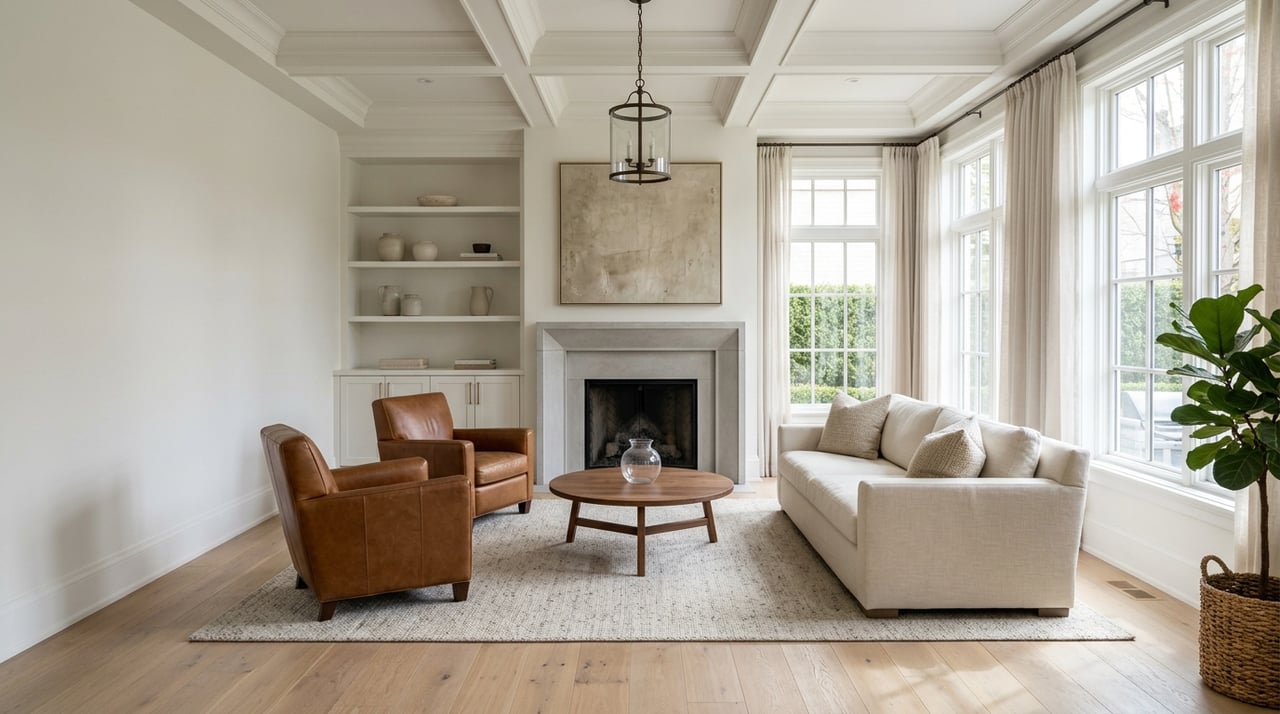
Not every room carries the same weight. NAR identified the living room, primary bedroom, kitchen, dining room, and outdoor spaces as the rooms most worth staging. In a luxury home, these spaces often shape the emotional response that drives strong offers.
If you are preparing for market, start there:
- Living room: simplify furniture, improve lighting, and create a clear focal point
- Primary bedroom: make it feel calm, spacious, and hotel-like
- Kitchen: clear counters, address wear, and highlight function and finish quality
- Dining room: create a sense of occasion without overpersonalizing the space
- Outdoor spaces: clean surfaces, refresh landscaping, and define seating or entertaining areas
These rooms do not need to feel overdesigned. They need to feel clean, intentional, and easy for buyers to understand.
Staging and media are no longer optional extras
Luxury marketing starts with how your home looks online. NAR found that 83% of buyers’ agents said staging helps buyers visualize the property as their future home. The same research also found that buyers increasingly expect homes to look picture-ready.
Professional visuals matter because the first showing usually happens on a screen. NAR reported that photos were important or much more important to 73% of buyer’s agents, traditional staging to 57%, videos to 48%, and virtual tours to 43%. For a luxury listing, that supports a marketing plan built around professional photography, video, and 3D or virtual tours.
Staging should also be part of your budget planning. NAR reported a median staging service cost of about $1,500, while agent-led staging came in around $500. For many luxury sellers, that cost is better viewed as a value-supporting marketing expense than as an optional upgrade.
Fix small problems before buyers find them
Minor issues can create outsized concern in a luxury showing. A sticking door, chipped paint, worn grout, or neglected landscaping can make buyers question larger systems they cannot see. In higher price ranges, buyers often expect visible evidence of strong upkeep.
Before listing, it helps to walk through your home with a critical eye. Look for maintenance items, cosmetic wear, and signs of deferred repairs. Taking care of those details early can improve first impressions and reduce negotiation pressure later.
A practical pre-listing checklist
Use this checklist as a starting point before you go live:
- Remove excess furniture and personal items
- Complete a deep whole-home cleaning
- Refresh paint where needed
- Handle minor repairs and maintenance items
- Improve front entry and curb appeal
- Tidy landscape beds, lawn, and outdoor living areas
- Stage key rooms for scale and function
- Schedule professional photography, video, and 3D tours
- Gather records for major updates, renovations, and systems
- Prepare required disclosures early
Time your launch only after the home is ready
Timing matters, but preparation matters more. Realtor.com’s 2026 Best Time to Sell report identified April 12 through 18 as the strongest week nationally, with 16.7% more views than the average week and homes selling about nine days faster. The takeaway for Lehigh County sellers is that spring can offer momentum, but only if your home is fully prepared before launch.
If you go live too early, you may waste your strongest first wave of attention on a listing that is not fully polished. In luxury real estate, first impressions are hard to reset. It is usually better to launch once the home is cleaned, staged, photographed, and disclosure-ready.
Plan for disclosures and due diligence early
In Pennsylvania, the Real Estate Seller Disclosure Law requires sellers of most residential properties to disclose known material defects in a signed property disclosure statement before the agreement of transfer is signed. The disclosure form covers major categories such as the roof, basement, termites, structural problems, additions or remodeling, water and sewage systems, plumbing, heating and air conditioning, electrical systems, hazardous substances, HOA matters, and title issues.
For luxury sellers, early disclosure planning can reduce renegotiation risk. If you already know about repairs, aging systems, or past issues, it is better to address them upfront than to let them surface late in the transaction. Buyers tend to respond better when information is organized and presented clearly.
Older homes may need extra diligence. Lead-based paint disclosure rules apply to most pre-1978 private housing, and the Pennsylvania Department of Environmental Protection reports that about 40% of tested homes in the state are above the EPA radon action guideline of 4 picocuries per liter. If your home is older, pre-screening for lead paperwork and radon before listing can help you avoid last-minute friction.
Understand how local transfer taxes affect your net
Price is only part of the financial picture. Your actual proceeds depend in part on transfer taxes, and in this area, local rates can vary by municipality. That means your net should be calculated from the exact property location, not from a countywide assumption.
Pennsylvania imposes a 1% state realty transfer tax, and Lehigh County requires transfer taxes and statements of value to accompany real estate transfers. Local taxes can increase the total. Bethlehem has a 1% city transfer tax, while Allentown’s total transfer tax rose to 2.5% effective January 1, 2026.
For luxury sellers, this matters because even small percentage differences can significantly affect the final net sheet. If you are comparing timing, pricing options, or expected proceeds, tax location should be part of the analysis from the start.
Look beyond the highest offer
Once offers come in, the best choice is not always the one with the biggest number. Offer strength also depends on financing certainty, contingencies, inspection risk, appraisal risk, and the buyer’s ability to close on your preferred timeline.
NAR notes that cash offers can be stronger if they speed closing, and contingencies can change the real value of an offer. In a luxury sale, careful offer review matters because a high contract price does not help if the deal falls apart during appraisal or inspection. A disciplined negotiation process can protect both price and certainty.
The Lehigh County luxury advantage
The current Lehigh County market still gives sellers opportunity, but luxury results are rarely driven by market conditions alone. The homes that perform best are usually the ones that look finished, photograph beautifully, disclose clearly, and enter the market at a price the data can support.
That is where a process-driven strategy matters. When prep, pricing, media, and negotiation all work together, you give buyers fewer reasons to hesitate and more reasons to act. In a market with clear micro-differences from Bethlehem to Upper Saucon Township and beyond, that kind of precision can make a meaningful difference in both sale price and overall experience.
If you are thinking about selling a luxury home in Lehigh County, the right guidance can help you prepare with confidence and price with discipline. The Shabana Pathan Group brings premium presentation, local market knowledge, and detail-driven transaction support to help you launch strong and sell strategically.
FAQs
How should you price a luxury home in Lehigh County?
- You should price it using recent sold, pending, and active comparable homes that closely match your location, size, condition, lot, and amenities, rather than relying on county averages or your desired net.
What rooms matter most when staging a luxury home for sale?
- The living room, primary bedroom, kitchen, dining room, and outdoor spaces are the rooms most worth staging because they often shape a buyer’s strongest first impression.
Does staging really help a luxury home sell?
- Yes. NAR’s 2025 staging research found that 83% of buyers’ agents said staging helps buyers visualize the home as their future property.
When is the best time to list a luxury home in Lehigh County?
- Spring can offer strong momentum, but the best time to list is when your home is fully prepared with repairs, cleaning, staging, media, and disclosures ready before launch.
What disclosures do sellers need in Pennsylvania?
- Sellers of most residential properties in Pennsylvania must provide a signed property disclosure statement covering known material defects before the agreement of transfer is signed.
Why do local transfer taxes matter when selling in Lehigh County?
- Local transfer taxes affect your net proceeds, and rates can vary by municipality, so your expected seller proceeds should be calculated using the exact location of the property.