Thinking about buying a historic home in Allentown? It can be an exciting move, but it also comes with a different set of questions than a newer property. You may be drawn to original woodwork, classic architecture, and established streetscapes, yet still wonder what repairs, approvals, and costs could come with that charm. This guide will help you understand what to check before you commit, what local rules may apply, and how to plan your budget and timeline with fewer surprises. Let’s dive in.
Why Allentown Historic Status Matters
Allentown currently highlights three locally designated historic districts: Old Allentown, Old Fairgrounds, and West Park. Each has its own architectural character, with examples ranging from Federal and Italianate homes to Victorian, Colonial Revival, and Queen Anne styles.
If you are buying a home with historic character, the first thing to confirm is whether it is in a local historic district. That matters because local district designation is what typically triggers review requirements in Allentown, not simply a historic label or National Register status by itself.
Before you make an offer, verify the property’s status through the city’s historic district map or GIS. If there is any doubt, the city’s historic office can help confirm whether the home falls within a district.
What Historic Review Means
In Allentown historic districts, exterior changes visible from a public right-of-way are generally the projects most likely to require preservation review. Interior-only work and routine maintenance usually do not require the same review.
That distinction is important if you already have renovation ideas in mind. Features like skylights, additions, satellite dishes, and some HVAC equipment placements may be treated differently depending on visibility from the street.
The city reviews proposed work at three levels: no review, staff approval, or HARB approval. If visibility is unclear, city staff can make a free determination before you move too far into planning.
Check District Rules Before You Fall in Love
Allentown’s current Guidelines for Historic Districts were adopted on February 16, 2022. The guidelines focus on repair, restore, and reuse, while also allowing some alternate materials where appropriate.
That is good news for buyers because the rules are not meant to freeze a home in time. Still, they do prioritize compatibility with the building’s character, which can affect your options for exterior updates.
If you love the location but want to change windows, rebuild a porch, replace siding, or alter the roofline, review those expectations early. It is much easier to assess a property clearly before you commit than to adjust your budget after closing.
What To Inspect in an Older Allentown Home
Historic homes can offer strong long-term appeal, but they also need a more careful eye during due diligence. In Allentown, some parts of the home deserve special attention because they affect both condition and future renovation flexibility.
Roof, Chimneys, and Drainage
Roofs are more than a weather barrier in historic homes. Allentown’s guidelines treat roof shapes as character-defining features that help establish the scale and rhythm of the neighborhood.
You should pay close attention to roof condition and insulation strategy. The city notes that a significant amount of heat loss can occur at the roof, which makes this a practical issue as well as a preservation concern.
Chimneys also deserve a careful inspection. Look for cracked bricks, missing or deteriorated mortar, spalling, and any signs of displacement.
Gutters and downspouts matter more than many buyers expect. Older masonry and wood can be vulnerable to moisture intrusion, so poor water management can lead to expensive repairs over time.
Masonry and Siding
If the home has brick or stone, ask your inspector and contractor to look closely at the mortar condition. The city recommends compatible mortar and hand-tool repointing because mismatched mortar can damage masonry and change the appearance of the facade.
For wood siding and trim, moisture is a major concern. Sunlight, insects, and poor repair work can also speed up deterioration.
Be careful with homes that have had synthetic siding added over original materials. According to the city’s guidelines, synthetic siding can trap water behind the surface, which may create hidden issues.
Windows and Porches
Original windows are often more valuable than buyers assume. Allentown encourages repair and reuse before replacement, and the guidelines note that repairs like caulking, weatherstripping, and replacing glazing compound can improve performance significantly.
If replacement is unavoidable, the new windows should closely match the original material, size, operation, and profile. That can affect both cost and approval timelines.
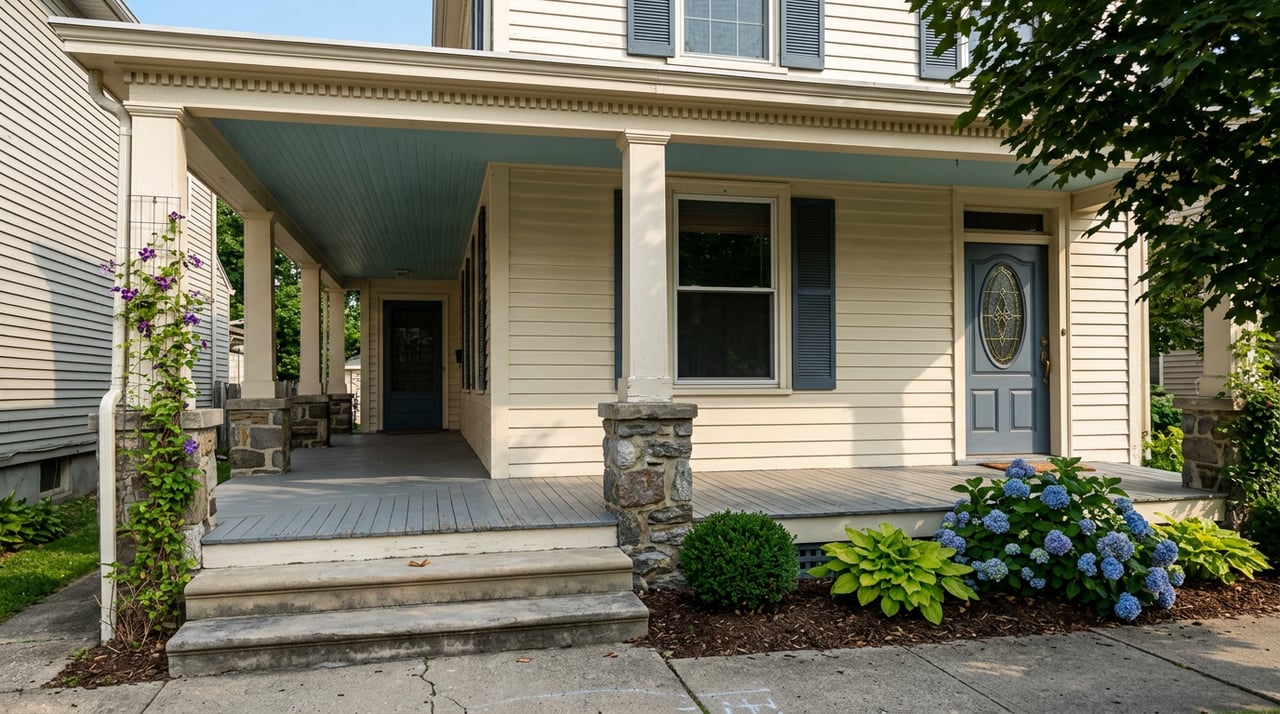
Porches are another major character feature in many Allentown historic homes. The city generally favors in-kind porch repair and discourages enclosing or re-styling porches in ways that change the original architecture.
Lead and Asbestos Risks
If the home was built before 1978, lead-based paint is a real consideration. Buyers are generally entitled to lead-disclosure information before purchasing most pre-1978 housing, and renovation activities like sanding, cutting, or window replacement can create hazardous lead dust.
Asbestos can also be a factor in older materials, especially if renovation would disturb them. Common examples can include floor tile, ceiling tile, pipe wrap, shingles, and siding.
If suspect material is damaged or likely to be disturbed, professional sampling may be needed. From a budgeting standpoint, it is smart to assume that testing or specialized handling could affect both cost and timing.
Understand the Approval Process
If the property is in one of Allentown’s local historic districts, exterior work visible from the public way may need a Certificate of Appropriateness, often called a COA. This is part of the city’s historic review process.
HARB meetings are held on the first Monday of each month, and applications are due 10 days before the meeting. The COA application fee is $25.
Buyers should also know that incomplete applications can be postponed. The city expects a complete package, which may include photos, a site plan, drawings, and product specifications.
That means design documentation should be part of your project timeline from the beginning. If you are buying a home with renovation plans, this process should be factored into your offer strategy and move-in expectations.
Historic Review Is Not the Only Step
Historic approval does not replace normal permitting. Allentown says permits may still be required for building, electrical, heating, plumbing, roofing, and demolition work.
The city also notes that licensed trades may be required, and all trades must have the required city business and trade licenses in the initial application. That is an important detail when you are comparing contractors.
If your plans involve changing the use of the property or adding dwelling units, zoning review may also apply. And if demolition is part of the project, Allentown requires both an approved Certificate of Appropriateness and a demolition permit.
Budget for Compatibility, Not Just Repairs
One of the biggest mistakes buyers make with historic homes is budgeting only for basic repairs. In a local historic district, compatibility and documentation can shape the real cost of the project.
Allentown’s HARB states that cost is generally not a review factor. In practical terms, that means the least expensive material or shortcut may not be the option that gets approved.
The city does allow some alternate materials and encourages early contact with staff to save time and money. Even so, review, documentation, and permit sequencing can extend a project compared with a similar update on a non-historic property.
If the home is pre-1978, lead-safe renovation planning can also influence contractor selection, scope, and cleanup procedures. If suspect asbestos is present, testing or professional handling may add another layer to your timeline.
A Smart Buyer Checklist
Before you commit to a historic home in Allentown, make sure you have answers to a few key questions.
- Confirm whether the property is in a local historic district
- Ask for permit history and any past COA history
- Verify whether prior exterior work was approved, if required
- Inspect the roof, chimneys, gutters, masonry, siding, windows, and porch carefully
- Review any signs of moisture intrusion or deferred maintenance
- Ask about lead-based paint disclosures for pre-1978 homes
- Flag any suspect asbestos materials before planning renovation work
- Check whether your planned exterior updates may need staff review or HARB approval
- Build extra time into your schedule for documentation, review, and permits
Why Local Guidance Helps
Buying a historic home is not just about style. It is also about understanding process, condition, and risk before you close.
When you know how Allentown’s local historic rules work, you can make better decisions about pricing, inspections, negotiations, and renovation plans. That kind of preparation can help you avoid expensive surprises and buy with more confidence.
If you are considering a historic home in Allentown or weighing whether an older property fits your goals, the right guidance can make the process much clearer. The Shabana Pathan Group can help you evaluate the property, understand the local process, and move forward with a smart plan.
FAQs
What should you confirm before buying a historic home in Allentown?
- Confirm whether the property is in one of Allentown’s local historic districts, because local district status is what usually triggers review requirements.
What exterior changes may require approval for an Allentown historic home?
- Exterior changes visible from a public right-of-way are generally the most likely to require review, while interior-only work and routine maintenance usually do not.
What parts of an older Allentown home deserve extra inspection?
- Pay close attention to the roof, chimneys, gutters, drainage, masonry, siding, windows, porches, and signs of moisture intrusion or deferred maintenance.
What should buyers know about windows in Allentown historic districts?
- The city encourages repairing and reusing original windows first, and if replacement is necessary, the new windows should closely match the originals in material, size, operation, and profile.
What health-related concerns can come with older Allentown homes?
- Homes built before 1978 may contain lead-based paint, and some older materials may contain asbestos, so testing, disclosure review, and lead-safe renovation planning may be important.
How does the HARB process work for Allentown historic homes?
- HARB meetings are held on the first Monday of each month, applications are due 10 days before the meeting, the COA fee is $25, and complete documentation is important to avoid delays.