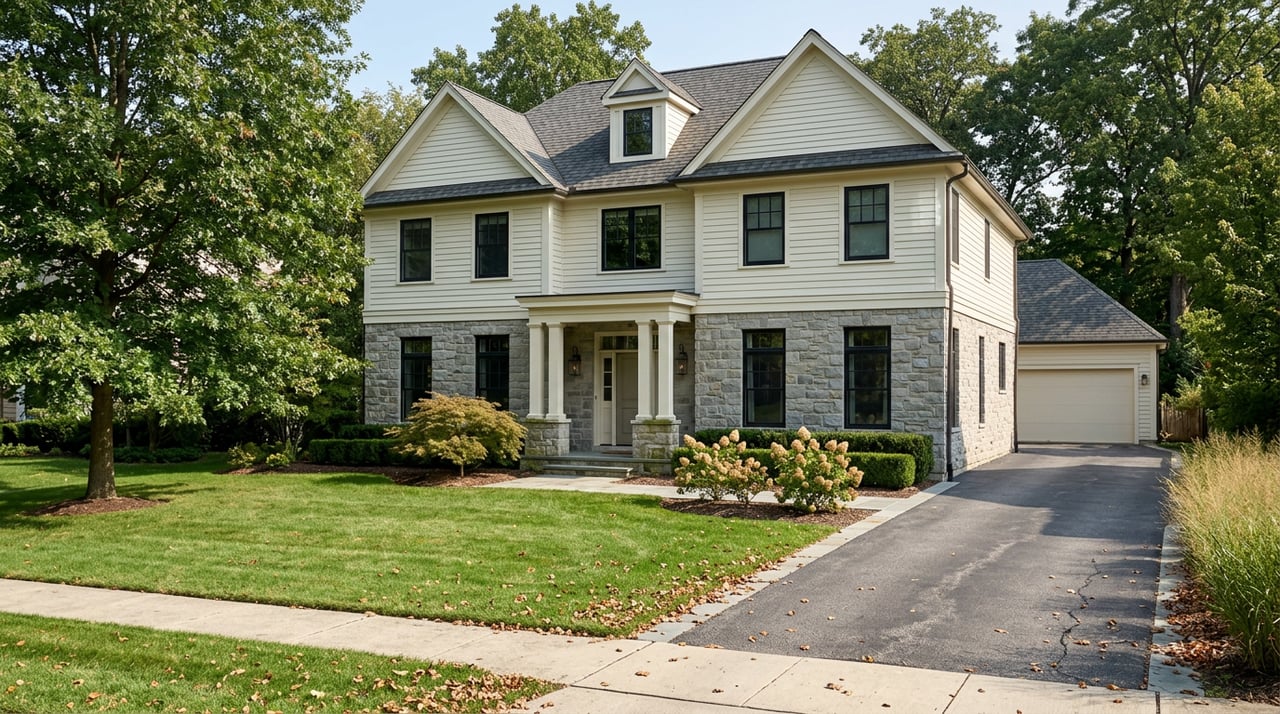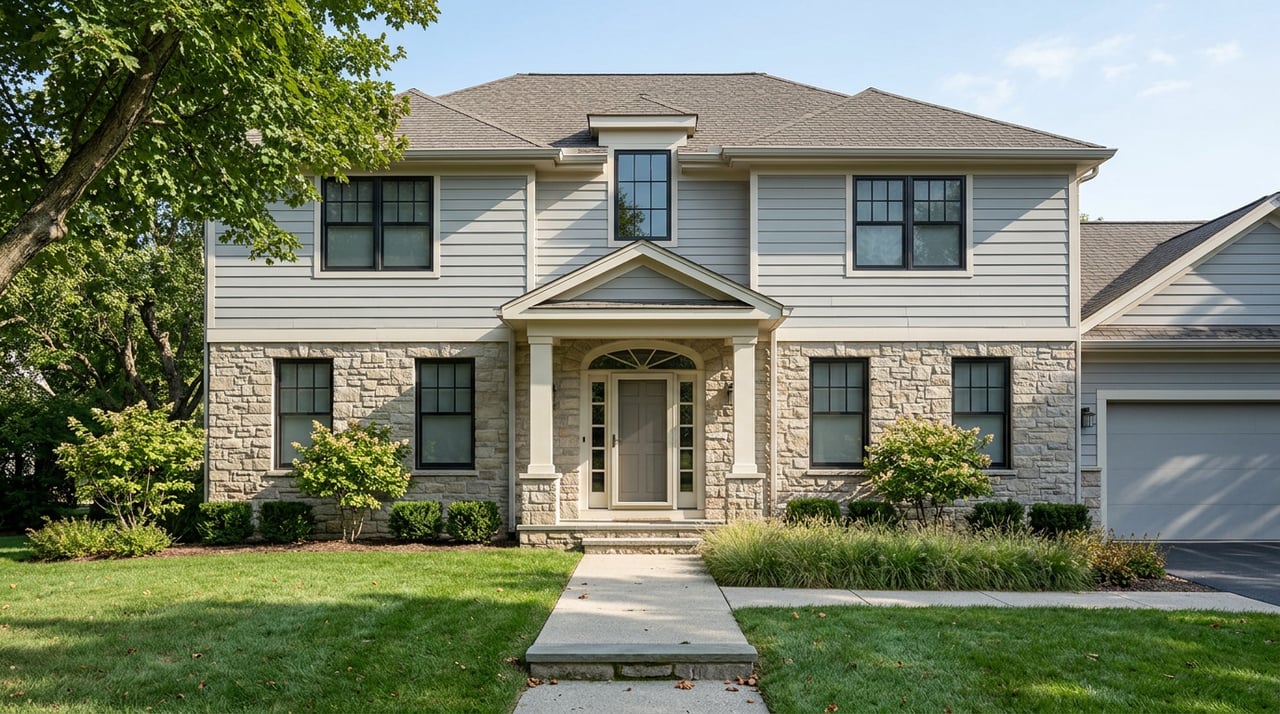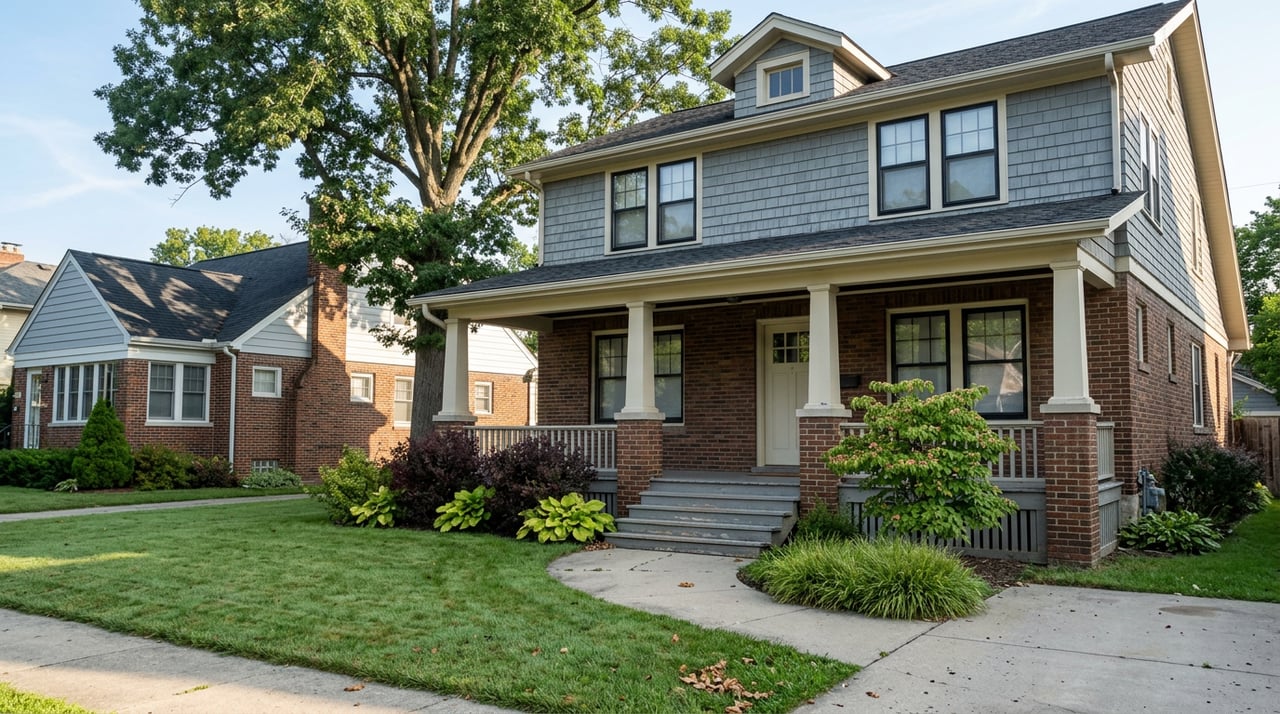
What if two nearly identical homes in Bethlehem, similar size, similar price, a few blocks apart, carried property tax bills that didn't match no matter how carefully you compared them? Not because one has a pool or a finished basement, but because one sits on the west side of the Monocacy Creek and the other sits on the east side of it.
That line is real. It is the boundary between Lehigh County and Northampton County, and it runs straight through the middle of Bethlehem. The West Side of the city sits in Lehigh County. Center City, the North Side, the East Side, and the South Side all sit in Northampton County. There is no sign at the crossing. There is no change in curb style or streetlight design. But the moment you cross it, the math behind your property tax bill changes completely, and understanding why matters more than most buyers realize before they write an offer.
Where the Line Actually Runs
Bethlehem is one of the few Pennsylvania cities split across two counties, and the Monocacy Creek is the dividing feature. Everything west of the creek, out to the city's border with Allentown, falls under Lehigh County. Everything from Center City eastward, including the South Side neighborhoods near Lehigh University and the SteelStacks campus, falls under Northampton County. A buyer touring homes across the city in a single afternoon could walk from one county into the other without noticing, yet each parcel is assessed, taxed, and appealed through an entirely separate county government.
That distinction sounds like an administrative footnote until you look at what it actually does to a tax bill.
The Number That Looks Alarming, and Isn't What It Seems
Here is where most people shopping in Bethlehem get confused, sometimes badly. Pull the 2026 millage rates for the city's own portion of the tax bill and Lehigh County parcels are taxed at 6.21 mills while Northampton County parcels are taxed at 19.64 mills, a rate roughly three times higher. Layer in the school tax and the gap looks even more dramatic. For the 2025-26 school year, the Bethlehem Area School District approved a rate of 19.42 mills on the Lehigh County side and 63.17 mills on the Northampton County side, again more than three times higher.
If you stopped reading there, you'd assume a Northampton County home in Bethlehem costs three times more in taxes than an equivalent Lehigh County home. That assumption is wrong, and it's wrong because of something buyers almost never ask about: assessed value.
Lehigh County and Northampton County calculate assessed value using different base years. That single fact is the whole story. It means a home's assessed value for tax purposes has no consistent relationship to its actual market price, and it varies depending on which county last recalculated the base. For Bethlehem Area School District parcels, the average assessed value on the Lehigh County side is $142,700. On the Northampton County side, it's $62,500. The gap in assessed value moves in the opposite direction of the gap in millage rate, and the two roughly cancel each other out.
Here's what that produces when you compare actual dollars owed:
| Lehigh County side | Northampton County side | |
|---|---|---|
| BASD millage rate | 19.42 mills | 63.17 mills |
| Average assessed value | $142,700 | $62,500 |
| Average school tax bill | $2,771 | $3,948 |
The rate difference between the two sides looks like a 3.25x gap. The actual bill difference is closer to 1.4x. That's the whole thesis in one table. A quoted mill rate tells you almost nothing about what you'll actually pay unless you also know how that county assesses value, and the two counties inside the same city don't do it the same way.
The Same Pattern Repeats on Every Layer of the Bill
This isn't confined to the school tax line. The city portion of the bill follows the identical logic. Because the same low Northampton County assessed values get multiplied by a much higher city millage rate (19.64 versus 6.21), and the same higher Lehigh County assessed values get multiplied by a lower rate, the net effect partially offsets itself again. County-level taxes stack on top of both, billed and collected separately from the city and school portions.
The upshot for a buyer is straightforward but easy to miss: you cannot look at a millage rate on a listing sheet or a county website and know what a specific Bethlehem property actually owes. You have to look at the actual current tax bill for that specific parcel, because the rate and the assessment base move in opposite directions depending on which side of the creek you're standing on.
What This Means When You're Comparing Two Listings
If you're comparing a West Side listing to a South Side or Center City listing at a similar price point, here's what actually protects you from a surprise:
- Ask for the seller's most recent full tax bill, not just the county's posted millage rate. The bill shows the real assessed value and the real total owed across city, county, and school portions combined.
- Confirm which county the parcel sits in before you get emotionally attached to a house near the boundary. Addresses close to the Monocacy Creek can be easy to misjudge without checking, since the change happens mid-block in some areas rather than at an obvious landmark.
- Ask whether the homestead exclusion applies and whether it's already been claimed. Some Lehigh County homeowners see a modest reduction tied to the state's homestead program, which shows up as a credit rather than a rate change.
- If you're weighing an appeal down the road, remember that appeals go to different boards depending on the county. Northampton County parcels file with the Northampton County Board of Assessment Appeals, and Lehigh County parcels file with the Lehigh County board. Both currently use the standard August 1 filing deadline each year.
None of this changes which school your kids attend. Bethlehem Area School District serves both sides of the line, so the county split affects the tax calculation, not the classroom.
Why This Matters More Right Now
Bethlehem's market is not a slow one to be casual in. Over the three months ending April 2026, homes sold in around 9 days on average with a median sale price near $318,000, up 10.4% year over year. Market trackers vary on exactly how fast homes are moving and how much prices have climbed this year, but the pattern across sources is a competitive market with multiple offers common. In a market where offers get written quickly and homes near the county line get shown back to back, the temptation is to compare two properties on price per square foot and call it a day. The tax mechanics underneath that price are a separate conversation, and they're one a buyer should have before the offer goes in, not after the first bill arrives.
A Few Questions Before You Write an Offer
Does the county line change my school district? No. Bethlehem Area School District covers addresses on both sides of the boundary. The county affects your assessed value and millage rate, not your school assignment.
Should I just avoid the higher millage rate side entirely? Not based on the rate alone. As the numbers above show, the side with the higher quoted millage rate does not necessarily produce the higher actual bill once assessed value is factored in. The only reliable comparison is the real current tax bill for each specific property.
How do I confirm which county a specific address falls in? The City of Bethlehem's own government offices can help verify this for any address, and each county's assessment office publishes its own current millage rates and assessment records.
Two homes with the same price tag in Bethlehem can carry tax bills that don't match, and the reason has nothing to do with the house itself. It has to do with a creek, a base year, and a quirk of Pennsylvania county government that most buyers never think to ask about until it's already on their closing statement. Get the actual number before you write the offer, not after.
If you're comparing homes across Bethlehem's county line, or anywhere else in the Lehigh Valley, the Shabana Pathan Group can walk you through what a specific property actually owes before you commit to anything. Schedule a Confidential Consultation to get the real numbers on your shortlist.