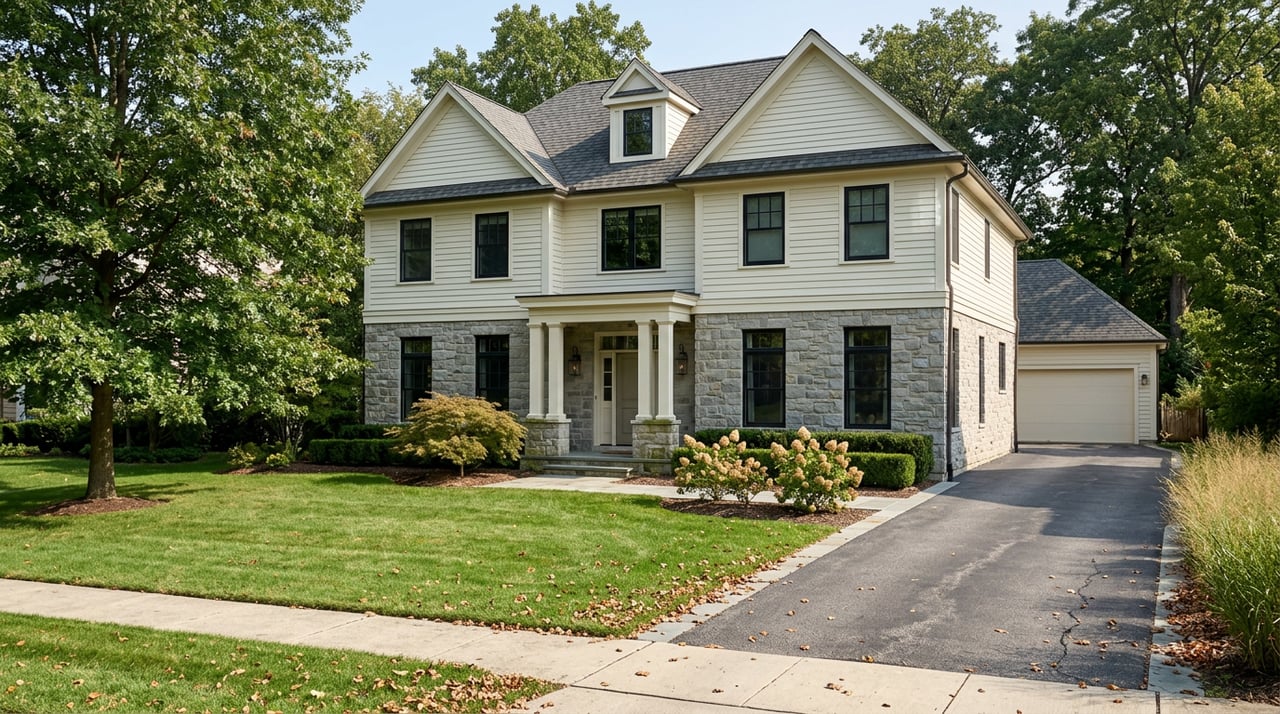
Under Article 119.04(b) of Bethlehem's city code, list a house in Bethlehem this fall and the ten-business-day countdown starts when the home is offered or listed for sale, not when you sign a contract. The deadline is worth understanding before you list.
In July 2026, Bethlehem City Council voted 5-1 to rewrite the city's property inspection and certificate-of-occupancy rules. The natural read is that the city just gave itself more leverage to hold up a sale. It didn't. Pennsylvania law already caps how far Bethlehem can go. What actually changed is the paperwork trail.
The Clock Starts at Listing, Not the Signature
Bethlehem's transfer ordinance has required a resale inspection for years. What trips people up is when the clock starts. Under Article 119.04(b) of the city code, every seller or their agent has to contact the Housing Inspections Officer within a reasonable time of listing the property, but no later than ten business days from the date the home is offered or listed for sale. Not ten business days from an accepted offer. Ten business days from the day it hits the market.
That distinction matters more this year because the July update tightened what happens on the back end. If the ten-day window slips because nobody knew it existed, a buyer's financing timeline keeps moving on its own schedule.
Councilmember Bryan Callahan was the lone no vote, and his objection is worth sitting with even if you're not a landlord. He argued the added fees eventually land on renters.
"Every time that we add another fee or another charge, the rents get higher in the city."
— Councilmember Bryan Callahan, quoted by WFMZ.
That's a rental-market concern, not a resale one, but it's a useful reminder that this ordinance touches fees, deadlines, and documentation across the board. If you're selling a single-family home, the version of that cost that hits you isn't higher rent. It's a doubled inspection fee if you never schedule the visit at all, a penalty Article 1731 explicitly allows the city to impose on anyone who sells or rents without completing the process.
What the Ordinance Actually Requires, In Order
| Milestone | Bethlehem Requirement |
|---|---|
| List the home for sale | Ten-business-day clock begins to schedule inspection |
| Schedule the city inspection | Must contact Housing Inspections Officer within that window (Article 119.04(b)) |
| Skip the inspection entirely | City can double the inspection fee (Article 1731) |
| Certificate of occupancy issued | Valid for one year from inspection date, or until the unit becomes vacant if it's a rental (Article 1731(d)) |
| Violations after transfer | New owner has 90 days to correct them, or 30 days if the property is a rental (Article 1731(f)) |
Bethlehem enforces this against the 2018 International Property Maintenance Code, the same baseline standard cities across Pennsylvania use, so the substance of what inspectors look for hasn't shifted. What shifted is the documentation chain: definitions, deadlines, and a clearer requirement that the paper trail actually reaches the buyer's hands before they sign.
What the City Still Can't Do
Here's the part that gets lost in translation when sellers hear "mandatory inspection" and assume the worst. Pennsylvania's Municipal Code and Ordinance Compliance Act, the state law Bethlehem's own officials say this update was designed to align with, puts a hard ceiling on municipal power in exactly this scenario. A 2016 amendment, Act 133, which took effect in January 2017, prohibits municipalities from denying a use and occupancy certificate based on the results of a point-of-sale inspection. The city can require the inspection. It cannot use routine violations to block your closing.
The one exception is a Temporary Access Certificate, reserved for a "substantial violation," meaning a condition serious enough to make the building genuinely unfit for habitation. Even then, the certificate exists to let a buyer access the property to fix the problem, not to kill the sale outright. A later amendment, Act 93, clarified that even tenant-occupied properties with a substantial violation don't automatically require displacing the tenant during the transfer.
So the honest version of this ordinance is: Bethlehem gained a stricter disclosure and timeline regime, not a veto. The risk for sellers isn't that the city stops your closing over a loose porch railing. The risk is that ignoring the ten-day window turns a routine inspection into a documentation scramble that eats into your own timeline while the buyer's lender is watching the calendar too.
What Actually Trips Sellers Up
The violations that show up most often on Bethlehem resale inspections aren't structural.
None of these individually derails a sale. Left unaddressed after a transfer, though, the city's own enforcement structure allows fines to accumulate once a compliance deadline passes.
One Bethlehem case that made its way into local industry reporting illustrates how fast this compounds. A homeowner inherited a property that sat vacant for eight months. During that stretch, the city cited it eight separate times for high weeds, plus missing GFCI outlets, peeling exterior paint, non-functioning smoke detectors, and an unsafe basement handrail. By the time the seller tried to move, the needed repairs were estimated at roughly $12,000, and accumulated fines had reached about $8,400. None of that started as a single catastrophic problem. It started as a ten-day window nobody used.
What This Means If You're Listing This Fall
If you're preparing to list in Bethlehem this season, the practical move is to treat the inspection request like part of your pre-listing checklist, not a step that happens after you already have a buyer. Call the Housing Inspections Officer through the city's Community and Economic Development office as soon as you decide to sell, not after your first showing. Walk your own property with the common-violation list above before an inspector does.
This is the kind of detail that separates a smooth Bethlehem closing from one that drags three extra weeks past what your buyer's mortgage commitment allows. It's also exactly where a background in contract and transaction law earns its keep. At Shabana Pathan Group, we build inspection scheduling into the pre-listing timeline for every Bethlehem seller precisely because a ten-day city deadline and a thirty- or sixty-day mortgage commitment don't wait for each other.
A Few Questions Before You List
Does this apply if I'm selling in Bethlehem Township instead of the City of Bethlehem? No. Bethlehem Township is a separate municipality with its own resale inspection process, run through its Code Enforcement Officer rather than the city's Housing Inspections Officer. Confirm which jurisdiction your property sits in before assuming either process applies.
If the inspection finds a violation, does that kill my deal? Not on its own. State law prevents the city from withholding a certificate of occupancy over routine violations. The new owner typically has 90 days to correct issues after transfer, or 30 days for a rental. The bigger risk is timeline, not veto power.
Does my mortgage lender care about the city's inspection report separately from their own appraisal? A documented violation can surface during underwriting if it's visible in photos or disclosed in the agreement of sale. Clearing minor items before listing avoids that conversation entirely.
Selling in Bethlehem right now means working inside a genuinely new set of deadlines, not a mysterious one. If you want a pre-listing walkthrough built around this exact timeline, reach out to Shabana Pathan Group to schedule a confidential consultation before your ten-day clock starts running.
This article is general information, not legal, tax or financial advice. Consult a qualified professional about your situation.